Planning a trip to Switzerland and wondering if the Swiss Travel Pass is really worth it?
While Switzerland may be famous for its mountains, lakes and storybook villages, it is also home to one of the most efficient public transport systems in the world.
For international visitors, the Swiss Travel Pass promises to make travelling around Switzerland easier. It offers unlimited transport across much of the country, along with additional benefits and discounts.
But it is not a small purchase and despite its convenience, it is not automatically the best choice for every itinerary.
So, what is the Swiss Travel Pass and is it worth it?
The honest answer is: it depends on where you are going, how frequently you plan to travel and how much you value flexibility.
In this guide, we explain exactly what the Swiss Travel Pass includes, what it does not cover, its advantages and disadvantages, and how to decide whether it is the right choice for your journey through Switzerland.

What Is the Swiss Travel Pass?
The Swiss Travel Pass is an all-in-one travel ticket that grants unlimited access to Switzerland’s world-class public transport system for a select number of days. This means you can hop on trains, buses and boats across the country without worrying about buying separate tickets.
Depending on the route, this can include:
- Trains
- Buses and Postbuses
- Lake boats
- Trams and local city buses
- Selected panoramic train routes
- Certain mountain railways and cable cars
The pass also includes complimentary admission to more than 500 museums and discounts on many mountain excursions and leisure experiences.
Rather than purchasing a separate ticket before every journey, you can simply carry the Swiss Travel Pass and valid identification. This makes it especially appealing to visitors planning to explore several Swiss regions during one trip.
According to SBB, Switzerland’s national railway company, the standard Swiss Travel Pass is available for 3, 4, 6, 8 or 15 consecutive days.
Swiss Travel Pass or Swiss Travel Pass Flex?
Switzerland offers several types of travel passes and comes in different durations to suit your itinerary: 3, 4, 6, 8, or 15 consecutive days. Prices vary depending on the length of your pass, but trust us – if you plan to explore multiple regions, it’s an amazing value compared to buying individual tickets. The longer your pass duration, the lower the daily cost. There are two main versions of the pass.
Swiss Travel Pass
The standard pass is valid for consecutive days.
For example, if you purchase a 4-day Swiss Travel Pass on Monday, it remains valid for Monday, Tuesday, Wednesday and Thursday, even if you do not use public transport on one of those days.
This pass is best suited to travellers who expect to use public transport regularly throughout their trip.
The Swiss Travel Pass Flex
The Swiss Travel Pass Flex allows you to choose 3, 4, 6, 8 or 15 individual travel days within a one-month period.
For example, you could use one travel day for Zürich to Lucerne, another for a day trip to Mount Rigi and a third several days later when travelling from Lucerne to Interlaken.
This offers more flexibility for visitors who plan to spend several days in one destination without using much public transport.
However, the Flex version is more expensive than the equivalent consecutive-day pass. Its additional discounts generally apply only on activated travel days, so it is important to plan carefully.
How Much Does the Swiss Travel Pass Cost in 2026?
The price depends on:
- The number of travel days
- Whether you choose the standard or Flex version
- First or second class
- The traveller’s age
The official adult prices for the standard Swiss Travel Pass in 2026 are:
| Duration | Second Class | First Class |
| 3 days | CHF 254 | CHF 405 |
| 4 days | CHF 309 | CHF 492 |
| 6 days | CHF 399 | CHF 634 |
| 8 days | CHF 439 | CHF 697 |
| 15 days | CHF 499 | CHF 787 |
The official adult prices for the Swiss Travel Pass Flex are:
| Travel Days Within 1 Month | Second Class | First Class |
| 3 days | CHF 289 | CHF 461 |
| 4 days | CHF 349 | CHF 555 |
| 6 days | CHF 424 | CHF 674 |
| 8 days | CHF 459 | CHF 729 |
| 15 days | CHF 519 | CHF 819 |
These prices are valid until 31 December 2026 and may be subject to change. Always confirm current prices on the official SBB website before purchasing.
What Does the Swiss Travel Pass Include?
The Swiss Travel Pass covers far more than intercity trains and covers most of Switzerland’s public transport network, making it one of the main reasons visitors find it so convenient.
- Unlimited travel on most regular trains, buses and Postbuses
- Local trams and buses in more than 90 towns and cities
- Scheduled boat journeys on many Swiss lakes
- Travel on panoramic railway routes, excluding reservation fees
- Free travel to Mount Rigi, Stanserhorn and Stoos
- Discounts of up to 50% on many other mountain excursions
- Complimentary admission to more than 500 museums
Exact coverage varies by route and operator, so check the official validity map before travelling—particularly for mountain railways and cable cars.
Iconic Train Journeys
Switzerland is home to some of the most breathtaking train routes in the world. With the Swiss Travel Pass, you can experience these iconic journeys without extra hassle. Take in the unbelievable alpine landscapes from the comfort of panoramic carriages.
- Glacier Express – Travel between Zermatt and St. Moritz on the world’s slowest (but most scenic) express train. Seat reservation required.
- Bernina Express – Wind through the Alps from Switzerland to Italy with jaw-dropping views at every turn. Seat reservation required.
- GoldenPass Line – Connects Lucerne to Montreux via stunning alpine landscapes and fairytale villages. Seat reservation optional, but recommended during peak seasons.
- Gotthard Panorama Express – A combination of boat and scenic train journey from Lucerne to Lugano. Seat reservation required for the train portion.
Free Mountain Excursions with Swiss Travel Pass
- Mount Rigi – Enjoy spectacular panoramic views and take the cogwheel train up the ‘Queen of the Mountains’. The round-trip with the scenic boat ride is included with the Swiss Travel Pass.
- Stoos – Ride the world’s steepest funicular to a breathtaking car-free mountain village.
- Stanserhorn – Experience the world’s first open-air cable car, the Cabrio and take in stunning 360° views.
Discounted Mountain Excursions
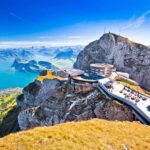
- Mount Pilatus – Take the world’s steepest cogwheel train and soak in 360° views (50% discount with Swiss Travel Pass).
- Jungfraujoch – Top of Europe – Ride up to the highest railway station in Europe (25% discount with Swiss Travel Pass).
- Schilthorn – Piz Gloria – Channel your inner James Bond at this panoramic revolving restaurant (50% discount with Swiss Travel Pass).

What Is Not Included?
The pass is comprehensive, but it does not cover everything. Additional costs may apply for:
- Seat reservations and supplements on premium panoramic trains
- Mountain excursions that are only partially discounted
- Ski passes and most ski lifts
- Private transport and special tourist services
- Bicycle transport
- Food and drinks
- International journeys beyond the covered Swiss route
- Certain privately operated attractions
The most important point is that discounted does not mean included. Always check the exact coverage and remaining cost of your planned mountain excursions before purchasing the pass.
Advantages and Disadvantages of the Swiss Travel Pass
Advantages
- Simple and convenient: One pass covers most trains, buses, boats and city transport, removing the need to buy tickets for every journey.
- Flexible travel: Change your route, make spontaneous stops or adapt your plans around the weather.
- Potential savings: It can offer excellent value on busy, multi-destination itineraries with frequent long-distance travel.
- Extra benefits: Many lake cruises, selected mountain excursions and more than 500 museums are included.
- Good for families and younger travellers: Children may travel free with the Swiss Family Card, while travellers under 25 receive a 30% discount.
- Predictable costs: Paying in advance makes it easier to manage your transport budget.
Disadvantages
- Not always the cheapest option: Individual tickets or a Swiss Half Fare Card may cost less for slower itineraries or stays based in one region.
- Many mountain excursions are only discounted: Popular destinations such as Jungfraujoch and Mount Titlis are not fully included.
- Consecutive days can be wasted: With the standard pass, quiet days still count toward its validity.
- Some extra fees remain: Certain panoramic trains require separate seat reservations or supplements.
- Comparison is still necessary: You should calculate your likely journeys before purchasing to determine whether the pass offers genuine value.
Overall, the Swiss Travel Pass is best for travellers who value convenience, flexibility and frequent travel. For visitors staying mainly in one destination, another ticket option may provide better value.
Swiss Travel Pass vs Swiss Half Fare Card
The Swiss Half Fare Card is one of the most important alternatives to consider.
It is valid for one month and allows international visitors to purchase many train, bus, boat and mountain transport tickets at approximately half price.
Unlike the Swiss Travel Pass, it does not provide unlimited travel. You must still buy a ticket for each journey.
The Swiss Travel Pass may be better if:
- You are travelling frequently
- You are visiting several regions
- You value complete flexibility
- You want to avoid buying individual tickets
- You plan to take lake boats and city transport
- Your itinerary includes Mount Rigi, Stanserhorn or Stoos
- You want to visit several included museums
The Swiss Half Fare Card may be better if:
- You are staying in one or two bases
- You have fewer long-distance train journeys
- Mountain excursions form the largest part of your transport budget
- You do not mind buying tickets as you travel
- You want to remain in Switzerland for several weeks
- You plan to mix public transport with private tours or driving
The Swiss Half Fare Card often works well for slower itineraries because you only pay for the transport you actually use.
How to Buy and Use the Swiss Travel Pass
The Swiss Travel Pass can be purchased online through SBB or at a staffed public transport sales point in Switzerland.
It can generally be purchased up to 11 months before travel.
If you purchase the standard Swiss Travel Pass online while signed into an SBB account, it can be displayed in the SBB Mobile app. If you buy as a guest, you will receive a QR code by email.
The Swiss Travel Pass Flex cannot currently be integrated into the SBB Mobile app.
During ticket inspections, the pass is only valid together with an original passport or official identification document. A photograph or copy of your identification is not sufficient.
Keep the following accessible while travelling:
- Your Swiss Travel Pass or QR code
- Your original passport or accepted identification
- Any required seat reservations
- Tickets for mountain transport not fully included
- Your Swiss Family Card, if applicable

Our Verdict: Is the Swiss Travel Pass Worth It?
The Swiss Travel Pass is worth it when it matches the rhythm of your journey.
For a multi-destination itinerary with regular trains, boats, local transport and selected mountain excursions, it can offer excellent value. It also provides something less easy to calculate: freedom.
You can choose a slower boat instead of a direct train. You can stop in a beautiful town along the way. You can change your plans when the mountains disappear behind the clouds.
For a slower holiday based mainly in one location, however, the Swiss Half Fare Card, Saver Day Passes or individual tickets may offer better value.
Our advice is simple: begin with the itinerary, not the pass.
Once you know where you want to go and how you would like to travel, the right ticket usually becomes much clearer.
Explore Switzerland With Riccardi Travel
A transport pass can help you move through Switzerland—but the right local guide helps you experience it.
At Riccardi Travel, we create private Swiss journeys that bring together iconic landscapes, thoughtful local experiences and hidden places away from the usual crowds.
From exploring Lucerne’s historic streets and travelling across Lake Lucerne to preparing fondue beside a secluded alpine lake, every experience is designed to feel personal, relaxed and beautifully Swiss.
If you are unsure which transport pass suits your itinerary, we can also help you understand how public transport, private guiding and mountain excursions fit together.
Planning a journey through Switzerland? Reach out to us here and we can create a private experience shaped around the places you want to see, and the moments you want to remember.